

Choosing an Extractor Fan For Your Island Cooktop
An extractor fan (likewise referred to as a cooker hood) is important for getting rid of steam, smells and smoke from your kitchen. Depending on the kind of extractor you pick, the air can be ducted away or recirculated utilizing charcoal filters.
Downdraft extractors sit flush beneath your worktop when not in use. They are perfect for creating a minimalist visual.
Downdraft extractors
A downdraft extractor is an exceptional service for those who want a streamlined and very little style in their kitchen. They are installed beneath the hob and rise up next to it when in usage, offering you a cleaner aesthetic in your kitchen. They are usually mechanically managed and have touch buttons, and some designs even include push-button control. Downdrafts are terrific for re-circulation and generally have charcoal filters that get rid of grease, smoke and smells from the air before pressing it back into your kitchen.
Nevertheless, they are not quite as powerful as an overhead cooker hood. They are likewise not able to record steam, smoke and smells rising horizontally from your pots and pans as they are cooking, which is something that an overhead extractor hood can do. They are likewise not as efficient for those who cook intensively and are a better alternative for light to medium cookers.
Another advantage of a downdraft extractor is that it can be placed at a lower level than an overhead extractor hood, implying it will not block your sightlines and block your view when you are cooking. This can be a big benefit for those with open-plan kitchen designs, as it can produce a more seamless shift in between your kitchen and living area.
Downdraft extractors are also much quieter than conventional extractor hoods, as they lie at the plinth rather than above your head. This makes them ideal for those who desire to keep their kitchen as a living and family space, as it will not disrupt conversations or require you to relocate to the dining location. At its greatest setting, a downdraft extractor is around the exact same volume as a vacuum.
The versatility of a downdraft extractor can also give you the versatility to install your hob anywhere in your kitchen, negating the need for an additional extractor hood that will use up important cabinet or island area. This is especially helpful in smaller sized cooking areas or those with a minimal budget, as it can help you create the kitchen of your dreams without blowing your entire restoration budget plan on one single little bit of set.
Angled extractors
A more modern-day alternative to chimney cooker hoods, angled extractor fans include a touch of design to kitchens. This type of hood can either be ducted out or fitted with re-circulating charcoal filters and offers a lot of choice when it comes to controls, speeds and performance.
Their curved, smooth black glass design makes them a fantastic option for modern kitchens and they typically include LED lights that shower the area in light while you prepare. This assists keep the area looking fresh and hygienic and reduces eye strain, making them a terrific choice for hectic homes.
Other useful advantages of angled hoods include their ease of cleansing and quieter operation. The smooth, metal surfaces can be cleaned down easily and the removable grease filters are typically dishwasher-safe to cut down on maintenance time.
As with any cooker hood, it's important to select one that's the ideal size for your hob. Make certain it covers the entire of your cooking zone so that it can remove all smoke, steam and odours as quickly as possible and prevents them from rising up to the ceiling. For this reason, it's frequently better to choose a larger design that might at first cost more than a smaller sized one.
Island hoods
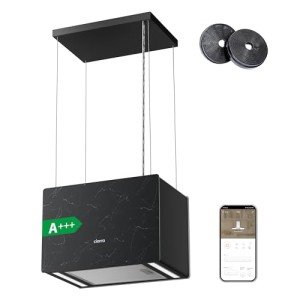
Unlike wall-mounted hoods, island hoods are suspended from your ceiling directly above an island or peninsula cooktop. They are generally developed to be visually enticing and can come in a variety of styles and surfaces to match any kitchen design. Whether you pick a standard, modern, or contemporary design, an island range hood will immediately raise your kitchen's decoration.
Choosing the best island hood for your kitchen needs careful consideration. Aside from looks, you must likewise consider the ventilation requirements of your space. To ensure proper air blood circulation, your hood must be at least as large as the cooktop and no greater than twice its height. It needs to also have adequate power to get rid of smoke, heat, and smells from your cooking area.
The amount of contaminated air your hood can catch and ventilate is measured by its CFM, or cubic feet per minute. To identify just how much CFM you need, just multiply the BTUs of your cooktop by 100. island extractor fan kitchen can also find CFM scores on a hood's product packaging or in its handbook. A higher CFM implies a more effective fan that can record more pollutants in a shorter quantity of time.
In addition to CFM, you need to also think about the sound level of your island hood. While most designs are relatively quiet, some are noisier than others. To lower the noise level, you can install your hood with a baffle filter, which will take in a few of the sound. Additionally, you can reduce the sound level by utilizing a low fan speed.
When installing your island hood, make sure to use smooth, non-flexible ducting. Flexible ducting causes air turbulence and can decrease the performance of your hood. Furthermore, you should avoid venting your hood into a wall cavity or a flue that brings combustible items.
At Abt, we bring a wide selection of island range hoods in varying sizes and styles to match your kitchen needs. Our hoods include built-in blowers, making them simpler to set up and more energy efficient than models with different blowers. We also offer ducted and convertible island range hoods that can be installed with or without ducting.
Ducted extractors
Whether your design is sleek and streamlined or statement-making, you'll discover a variety of extractor fans to suit all budgets. The very popular designs begin at around 100 euros, which is a fantastic rate point for a practical and stylish kitchen extractor fan. If you're ready to spend a bit more, you can go with a fan with a lovely design that's sure to impress guests and create a real talking point in your house.
In addition to helping to keep your kitchen tidy and hygienic, extractor fans are likewise an important safety function for any home. They get rid of smoke, steam, and cooking odours from the air to avoid these impurities from developing on surface areas and infecting your food with bacteria. In addition to this, they can also help in reducing condensation and humidity, which is typically the cause of mould and mildew in cooking areas.
Ducted extractors include a blower motor that's connected to ducting that vents outside the home. These fans are ideal for homes without any existing ventilation, and they can be fitted to the ceiling or wall above an island. Some hoods can even be integrated into the design of your kitchen, mixing in effortlessly and looking unobtrusive when not in usage.
The disadvantage of ducted extractors is that they can be noisy, particularly when completely operation. However, this is to be expected when they're pressing air through ducting that can't be recirculated back into the kitchen. If you're looking for a ducted extractor fan, it's essential that it's positioned no greater than five metres far from an external wall, which reduces by 1.2 m for each right-angled bend in the ducting.
If you're interested in installing a ducted extractor, it's advised that you have the system expertly installed. This will ensure that it meets developing guidelines and is established properly. As a rule, the fan will require to be cleaned up every 3 to 6 months. The charcoal filters need to be replaced regularly as they can become saturated with grease and odours over time. If you're unsure how to clean your extractor hood, inspect the user manual for your model. You can generally find this in the downloads tab on the item page or by going to the website of your chosen extractor hood brand.